HOW WE WORK

The Value of Time

In an era of fast print and quick-dry glues, books have become disposable. We stand against this trends. At The Ledger House, a single book can take anywhere from fifteen to eighty hours of dedicated hands-on craftsmanship.

We source our leather from historic Italian tanneries that use vegetable bark tanning liquors, producing a natural material that smells of oak forests and develops character. Our thread is pure Irish flax, waxed with local organic beeswax to ensure smooth glide and prevent dry rot.

"Every crease, fold, and stitch contains human energy. We do not use adhesives to hold books together; we rely on structure, thread, and muscle."
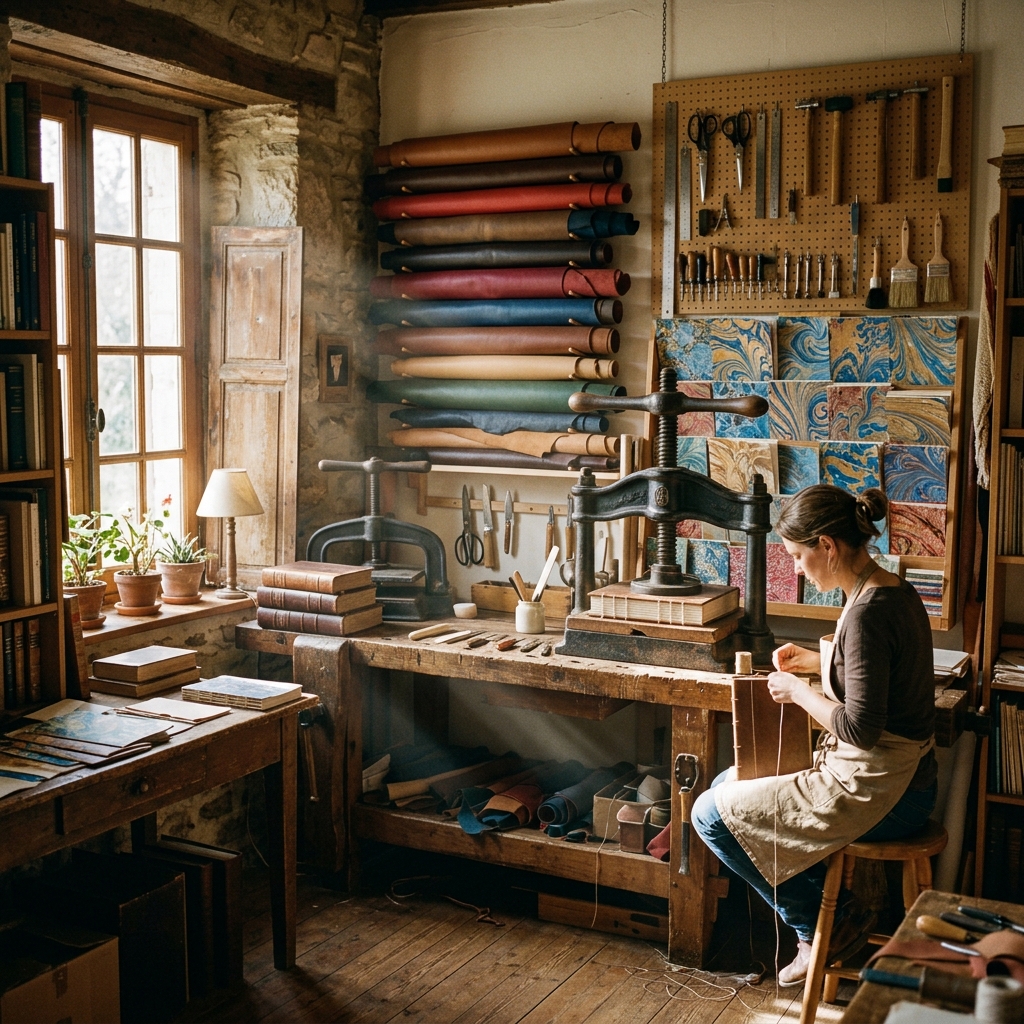
Traditional book presses
THE STEPS

The Binding Process

1. Signature Sewing

Loose leaves are grouped into "signatures" (folded sections), which are pressed and hand-sewn onto thick linen support tapes using classic linen threads.

2. Rounding & Backing

The spine of the sewn book block is hammered into a beautiful curve (rounded) and placed into a wooden backing press to form joints that accommodate the cover boards.

3. Leathering & Gilding

Wet leather is carefully stretched and formed over the spine and boards. Once dry, brass stamps are heated over flame and pressed into gold leaf sheets to gild titles.

OUR ARSENAL

The Traditional Tools

Most of our studio's equipment is historical. Our cast-iron nipping presses and wooden standing presses date back to the late 19th century, applying slow, balanced pressure that modern pneumatic machinery cannot match.

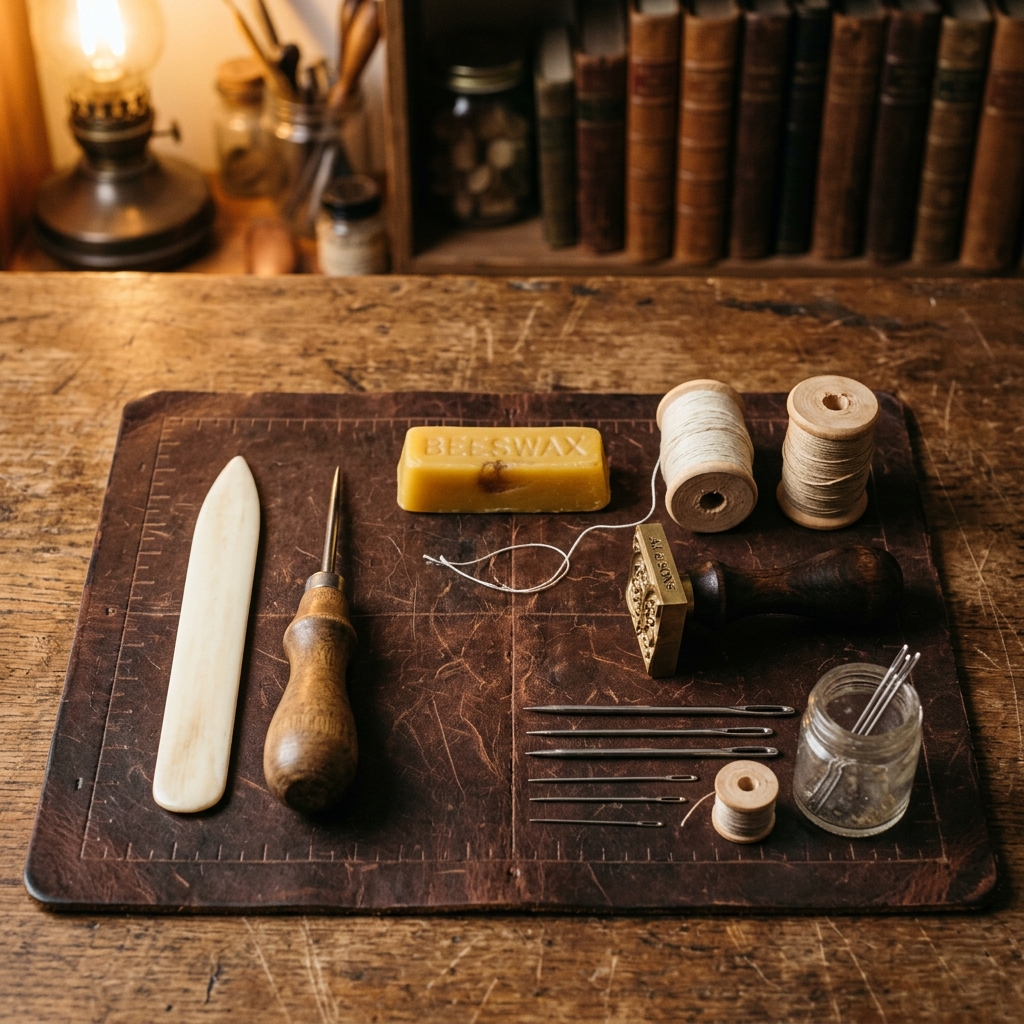
Bone Folders
Real bone blocks used to crease signatures cleanly.
Binding Awls
Heavy-duty spikes to punch holes for thread lines.
Brass Hand Stamps
Heated stamps used to burn labels and borders.
Nipping Presses
Heavy iron screws that compact book blocks.
Bookbinding tool setup
Your Tool Bag